
 EN

KAPURO TFR-18 Underground Personnel Carrier Ships to Overseas Mine
Product overview
A 1,600 mm body. Eighteen seats. A 4.8 km/h crawl gear for drifts too narrow to swing a bus around in. The TFR-18 underground personnel carrier left our works in Shandong this week, chained inside standard containers and booked for a non-coal mine overseas.
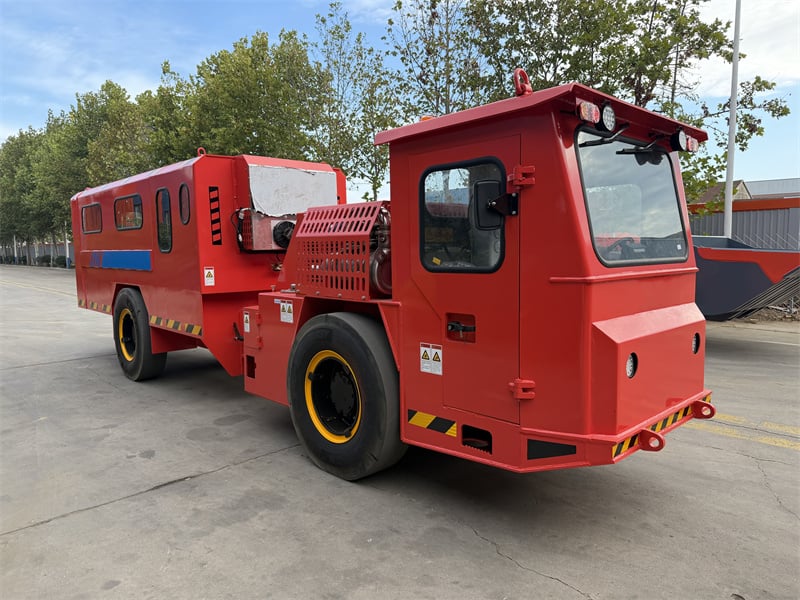
The TFR-18 is an articulated underground personnel carrier built around one task: moving a shift crew between the portal, the ramp and the working faces without a walk through unsupported ground. The front frame carries a sealed two-seat driver cabin. The rear frame carries a sixteen-seat passenger cabin with side doors on both sides and a rear door. Eighteen people, one trip.
Dimensions run 7,900 mm long, 1,600 mm wide and 2,290 mm high, with 290 mm of ground clearance and a kerb weight near 9,000 kg. Width decides tenders: an underground personnel carrier at 1,600 mm enters sections a converted surface bus cannot reach. Underground mining equipment is bought on availability, and a crew walking in is a crew not cutting.
Power is a Cummins F4.5 or QSB4.5 water-cooled diesel at 96 kW or 119 kW, through a DANA 1201FT20000 integrated torque-converter transmission and Tuoxing UK6T-F/R axles. Three gears each way top out at 18.0 km/h, the working range of a mining personnel truck rather than a road speed.
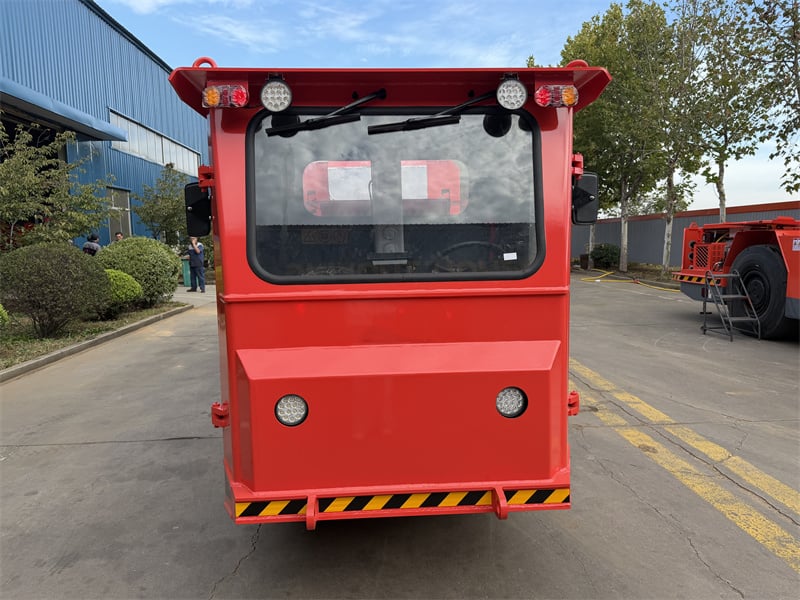
The units in the photographs wear the standard red livery, with yellow-and-black hazard marking, LED work lighting and folding access steps fitted as shipped.
Product features and operator interface
Loading eighteen people is where most underground personnel carriers lose time. The TFR-18 splits the crew across two compartments: two seats in the sealed driver cabin, sixteen in the rear cabin, each with its own doors. The rear cabin of this mining personnel truck opens on both sides and at the back, so a shift empties in seconds instead of queueing through one opening. Folding steps sit under the door sills. Glazing runs the whole length of the passenger cabin at seated eye level, so the compartment does not close in on itself and passengers watch the roadway ahead rather than a blank panel. Bench seats face forward, a detail that separates a purpose-built underground personnel carrier from a flatbed with planks bolted across it.
Steering is where this underground personnel carrier earns its place underground. The chassis is centre-articulated, with two double-acting hydraulic cylinders turning the joint through 2 x 40 degrees. Minimum turning radius measures 4,300 mm to the inside of the body and 6,300 mm to the outside. The joint also swings plus or minus 7 degrees laterally, letting the front and rear frames sit at different angles over a crowned roadway without loading the chassis. On a curved ramp the machine follows the line instead of shunting at every bend.
Three speeds each way, 4.8, 10.4 and 18.0 km/h, are geared for a mine rather than a highway. In underground mining equipment, first gear does the real work: a full crew climbs a ramp at walking pace with the engine inside its torque band, while an underground personnel carrier spends most of its shift in first and second. Third is for the haul road, where a mining personnel truck can run at 18.0 km/h. Rated gradeability is at least 14 degrees fully laden and maximum traction force is 105 kN, both following from the axle and tyre package rather than from a claim. Tyres are 10.00-20.
Braking deserves the closest reading. Both axles run fully enclosed, spring-applied, hydraulic-release multi-disc wet brakes at the wheel ends. On a mining personnel truck the spring applies the brake and hydraulic pressure releases it. Lose pressure, lose the engine, stall on a ramp, and the brakes clamp on their own. There is no separate park brake to forget and no air circuit to bleed down overnight. Because the discs run in oil inside the axle housing, water, grit and fines never reach the friction surfaces, the failure mode that takes dry brakes out of service underground.
From the seat, the layout is deliberately ordinary: a steering wheel, a direction and range selector, and pedals where a haul-truck operator expects them. Full hydraulic steering keeps effort low across a long shift, and the sealed cabin of an underground personnel carrier, with wipers, mirrors and LED lighting, holds a clear view in wet or dusty air. The engine bay sits between the frames, behind the driver rather than beside the crew, which keeps noise and heat out of the passenger cabin and gives the operator a short sightline to the rear-door mirror when reversing to a bay.
Production process and quality control
Every TFR-18 underground personnel carrier begins as plate and section steel. Material is checked against the drawing for grade, thickness and flatness before cutting, and no frame enters the welding shop until that check clears.
Front and rear frames are welded in fixtures, not freehand, so the articulation bores stay concentric through the heat cycle. The joint is machined as a matched pair and trial-fitted before paint. A frame for an underground personnel carrier that needs shimming on the assembly floor will not hold alignment after a year of ramps and tight turns, and the misalignment shows up as a wandering nose long before a gauge finds it.
Drive axles are assembled in-house: UK6T-F/R housings, final drives, and the wet brake packs that give the mining personnel truck its fail-safe behaviour. Each brake pack is pressure-tested before it goes into a housing, because a brake held on by spring force is only as reliable as its seals.
The Cummins engine and DANA transmission arrive as a matched package and are married to the frame as one unit, keeping driveline angles at the design value instead of correcting them with spacers on the floor. That is the usual source of vibration and premature joint wear in an underground personnel carrier.
Steering, braking and oil replenishment circuits are plumbed with branded pumps, valves and cylinders, then pressure-tested and cycled lock to lock before the underground personnel carrier leaves its bay. Every hose run is routed clear of the articulation arc, since a chafed line on a ramp is a brake failure waiting to happen.
Factory testing covers what a mine will actually do with the mining personnel truck. Brakes are checked for apply and release, including a deliberate pressure-drop test. Steering is cycled through its full 2 x 40 degree range. The driveline runs all three gears in both directions. Laden gradeability of 14 degrees and the 105 kN traction figure are verified against the test sheet, and the plus or minus 7 degree swing is checked at full lock.
Paint goes on after the frames are assembled and before cabin fit-out, so the red livery of an underground personnel carrier and its hazard marking are not touched up around glass and wiring afterwards.
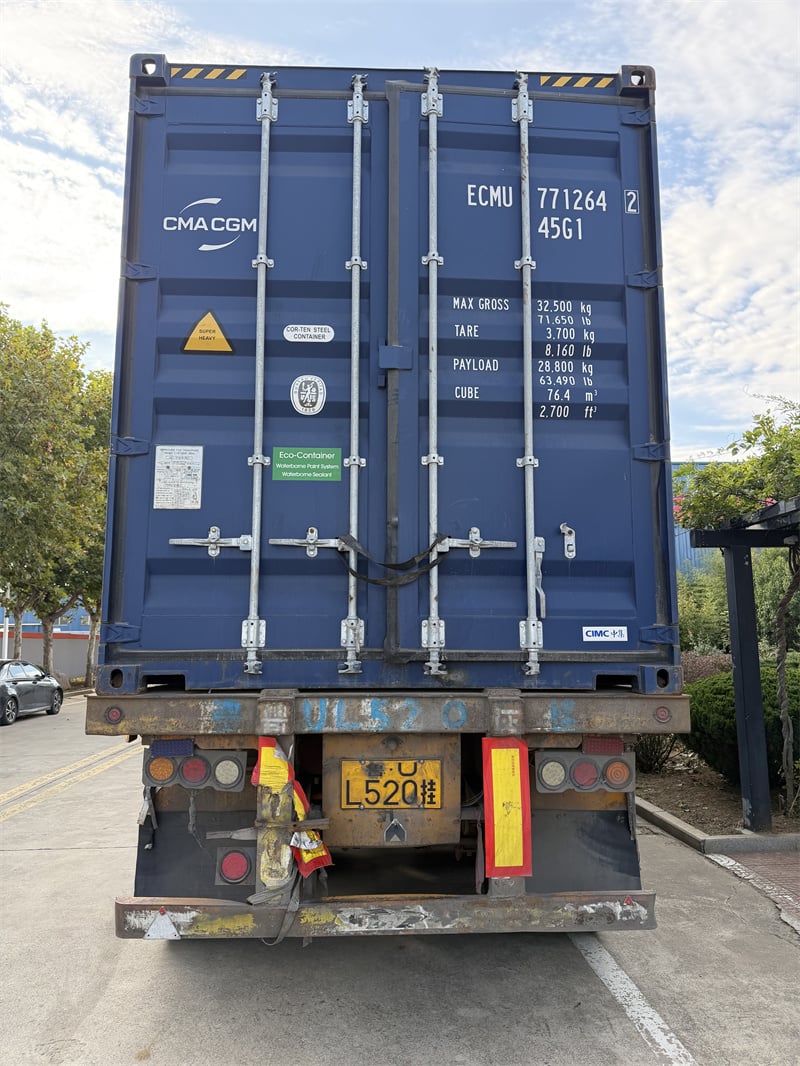
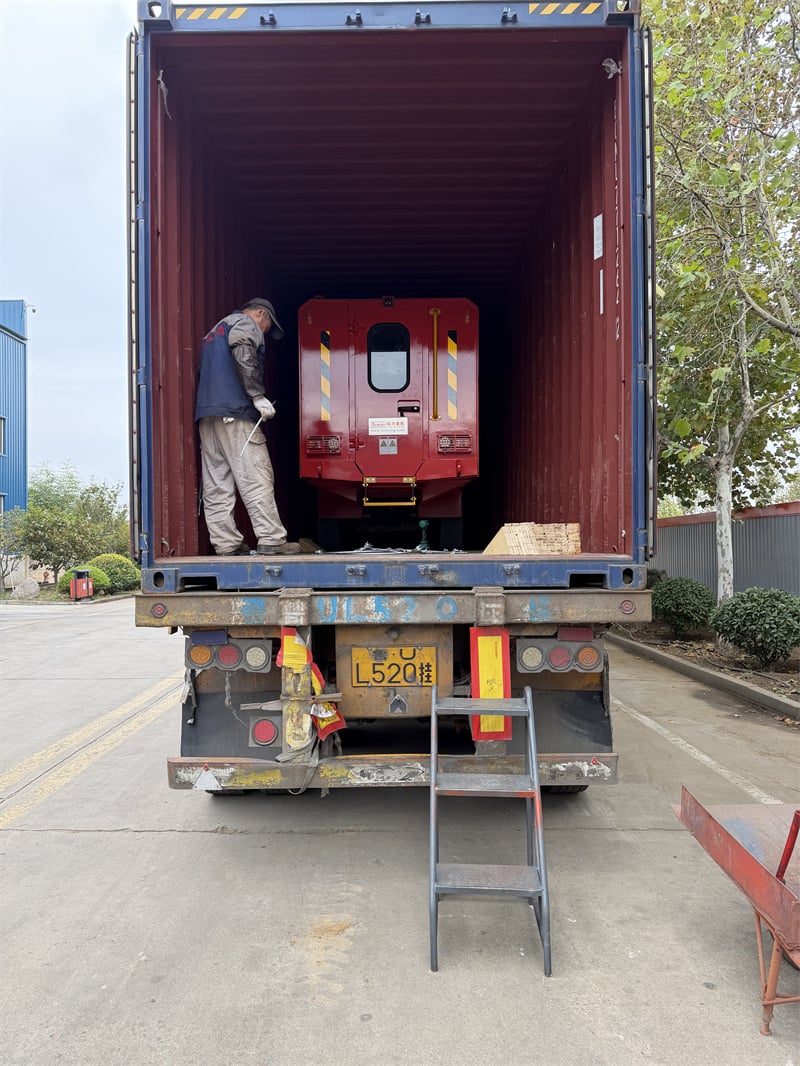
Packing follows the same logic as the machine. Spare parts and loose items travel in wooden crates and on pallets, blocked against the container wall. The carrier is lashed at the chassis rather than the body, with chocks under both axles, a rule that applies to every underground personnel carrier we ship. Loading is supervised by the team that built the unit, and the photographs with this article are from that loading.
Request a selection review
Send us two numbers: the width of your narrowest drift and the largest crew you move in a shift. Our engineers will confirm whether the TFR-18 underground personnel carrier fits your roadway, what gradient a fully loaded mining personnel truck will hold, and whether a smaller or larger unit in the range suits you better. You will get a specification sheet, a delivered price and a spare-parts list, and an honest answer if this underground mining equipment is wrong for your ground. The TFR-18 page on our Alibaba.com store carries the full parameter table for this underground personnel carrier and the current build options.