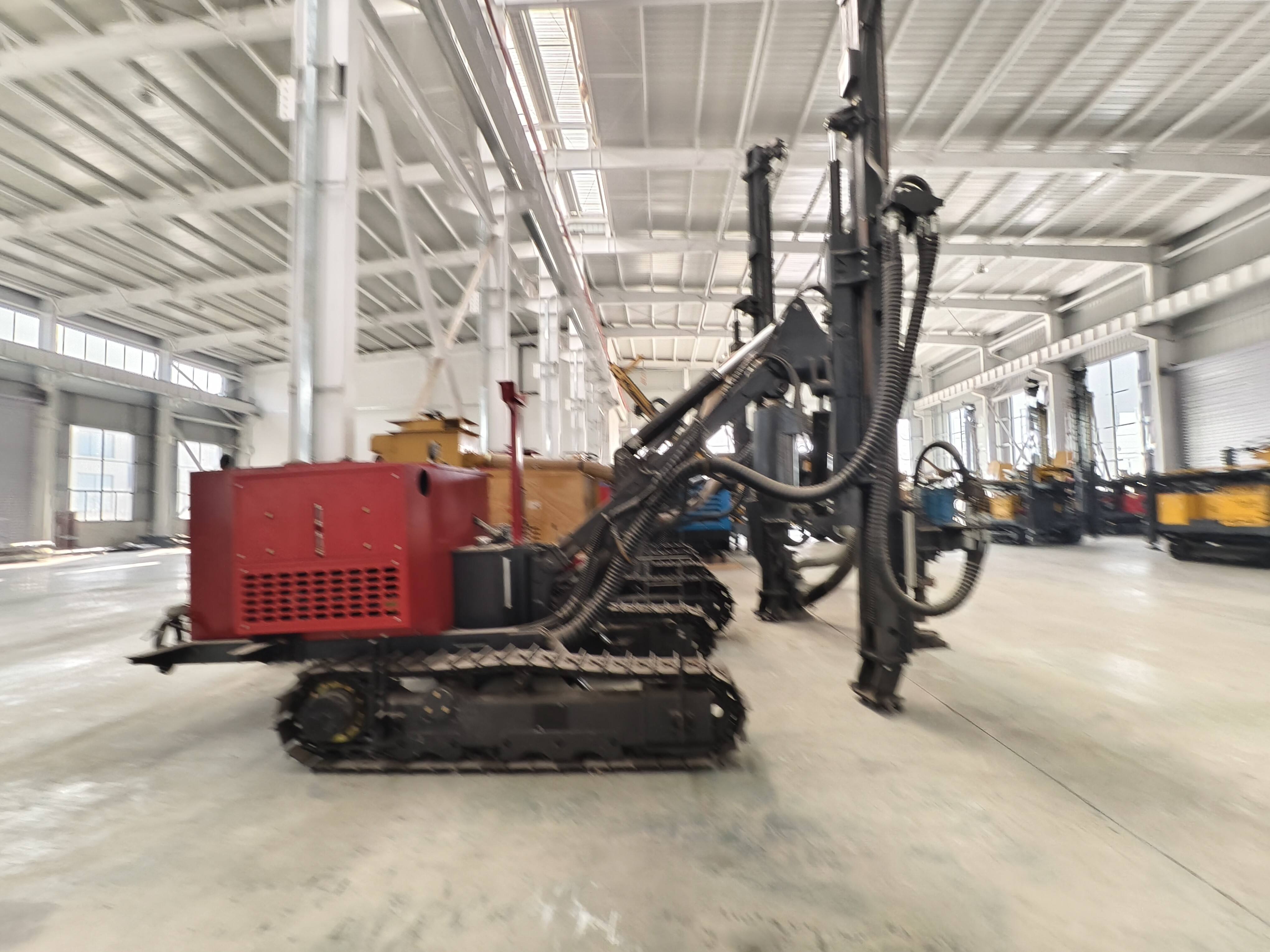
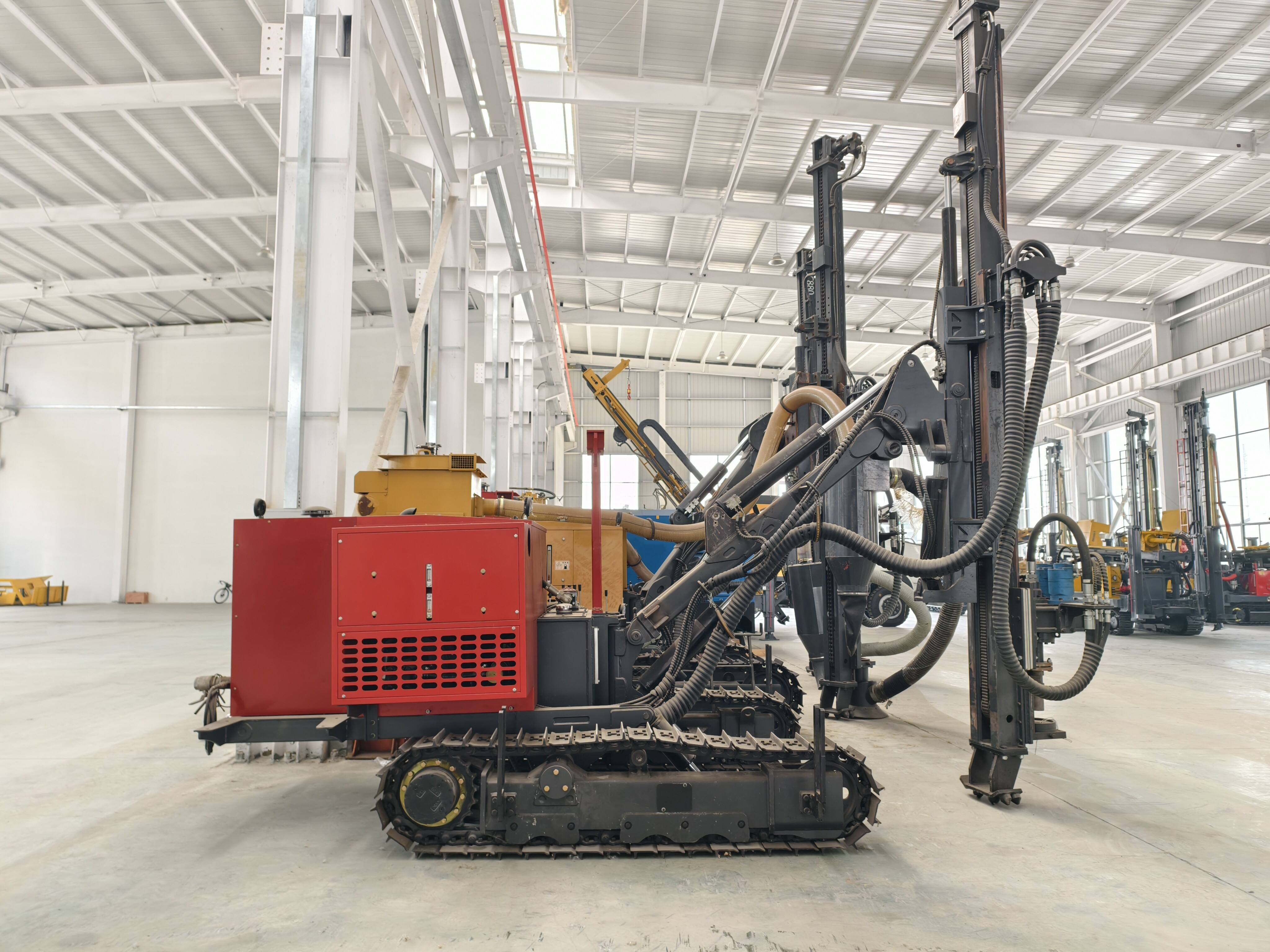
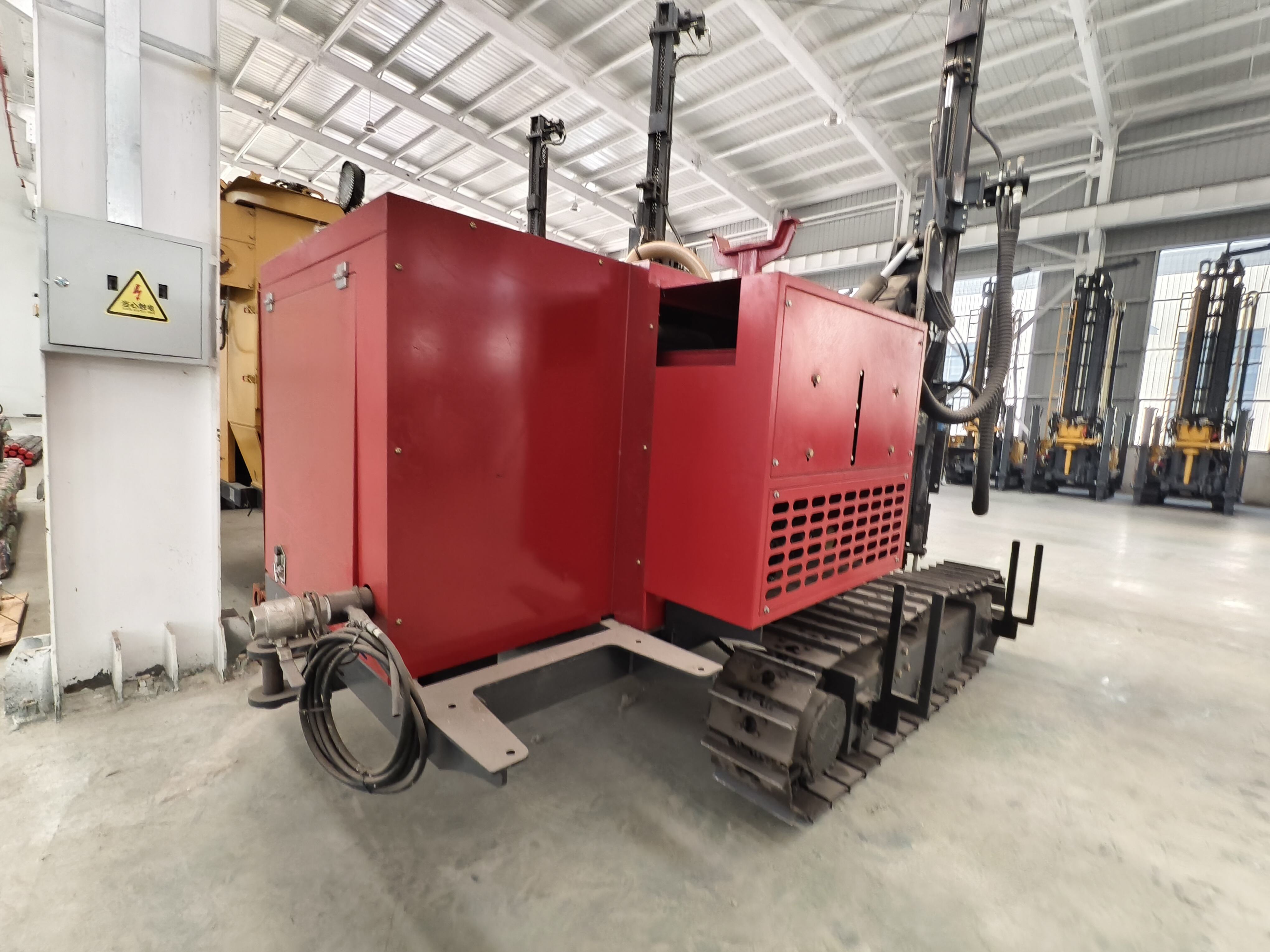
Down the Hole Drilling Machine: Superior Performance for Mining, Construction and Water Well Applications

All Categories

down the hole drilling machine

The down the hole drilling machine represents a revolutionary advancement in drilling technology, designed to penetrate various geological formations with exceptional precision and power. This sophisticated equipment operates by positioning a pneumatic hammer directly at the drill bit location, creating a highly efficient drilling mechanism that delivers superior performance across diverse applications. The primary function of the down the hole drilling machine involves converting compressed air energy into powerful percussive force, enabling operators to break through hard rock formations, dense soil layers, and challenging substrates that would prove difficult for conventional drilling methods. The technological architecture incorporates a robust hammer mechanism that strikes repeatedly at high frequency, pulverizing rock and other materials while simultaneously using air pressure to evacuate drilling debris through specialized channels. This dual-action process ensures continuous operation without frequent interruptions for cleaning or maintenance. Modern down the hole drilling machines feature advanced control systems that allow operators to adjust parameters such as air pressure, rotation speed, and penetration rate according to specific ground conditions. These machines find extensive use in mining operations, where they create blast holes for ore extraction, in construction projects requiring foundation work or anchoring systems, in water well drilling for agricultural and municipal purposes, and in geothermal exploration where deep penetration is essential. The engineering design emphasizes durability, with components manufactured from high-grade alloys capable of withstanding extreme operational stresses. Hydraulic systems provide smooth feed control, while integrated cooling mechanisms prevent overheating during extended drilling sessions. The versatility of the down the hole drilling machine makes it an indispensable tool for contractors, mining companies, and drilling specialists who demand reliable performance in challenging environments where efficiency and accuracy directly impact project timelines and profitability.


New Product Releases

The down the hole drilling machine delivers remarkable benefits that directly translate into cost savings and improved project outcomes for operators across multiple industries. First and foremost, this equipment achieves significantly faster penetration rates compared to traditional top hammer drilling systems, allowing crews to complete drilling projects in considerably less time. This speed advantage means fewer labor hours, reduced equipment rental costs, and quicker project turnover, enabling businesses to take on more contracts and increase revenue potential. The precision drilling capability ensures that holes maintain consistent diameter and straightness throughout their depth, eliminating the common problem of deviation that plagues other drilling methods. This accuracy proves crucial for applications requiring exact specifications, such as blast hole patterns in mining or foundation anchors in construction, where even slight misalignment can compromise structural integrity or operational efficiency. Energy efficiency stands as another compelling advantage, as the down the hole drilling machine consumes less fuel and compressed air per meter drilled compared to alternative technologies. This reduction in energy consumption directly lowers operating costs while also minimizing environmental impact, an increasingly important consideration for companies committed to sustainable practices. The machine operates effectively across an impressive range of rock hardnesses, from soft sedimentary formations to extremely hard granite and quartzite, eliminating the need to switch between different drilling systems as geological conditions change. This versatility streamlines operations and reduces equipment investment requirements. Maintenance demands remain minimal due to the simple yet robust design, with fewer moving parts exposed to wear compared to complex drilling alternatives. Operators appreciate the reduced downtime for repairs and the lower spare parts inventory needed to keep machines operational. The powerful hammer action creates cleaner holes with less wall damage, improving stability in mining applications and ensuring better cement bonding in foundation work. Operators benefit from improved safety features, including reduced vibration transmission to the operator platform, lower noise levels, and better dust control through efficient air circulation systems. The compact design of many down the hole drilling machines allows access to confined spaces and difficult terrain where larger drilling rigs cannot operate, expanding the range of projects that contractors can undertake. Finally, the proven reliability of this technology means consistent performance day after day, building client confidence and establishing strong reputations for drilling contractors who invest in quality down the hole drilling machines for their fleets.

Practical Tips

What Should Mining Companies Consider When Selecting an Underground LHD Loader?

11

Dec

What Should Mining Companies Consider When Selecting an Underground LHD Loader?

Underground mining operations require specialized equipment that can withstand harsh conditions while maintaining optimal performance and safety standards. The selection of an underground LHD loader represents one of the most critical decisions minin...
View More
Why Are LHD Loaders Preferred for Material Handling in Confined Spaces?

11

Dec

Why Are LHD Loaders Preferred for Material Handling in Confined Spaces?

Underground mining operations and construction projects in confined spaces present unique challenges that require specialized equipment capable of navigating narrow tunnels and restricted work areas. LHD loaders have emerged as the preferred solution...
View More
What Factors Affect the Performance of an Underground Mining Scoop?

07

Jan

What Factors Affect the Performance of an Underground Mining Scoop?

The performance of an underground mining scoop depends on numerous interconnected factors that directly impact productivity, safety, and operational efficiency in mining operations. Understanding these variables is crucial for mining engineers and op...
View More
The Science of Climbing: How Drivetrain Design Determines Underground Truck Performance on Steep Ramps

18

Mar

The Science of Climbing: How Drivetrain Design Determines Underground Truck Performance on Steep Ramps

When underground operations push deeper into the earth, the challenges of moving materials up steep gradients become exponentially complex. The ability of an underground truck to conquer challenging ramps isn't just about raw power—it's fundamentally...
View More

Get a Free Quote

Our representative will contact you soon.
Email
Name
Company Name
Message
0/1000

down the hole drilling machine

Exceptional Penetration Power for All Rock Types

Exceptional Penetration Power for All Rock Types

The down the hole drilling machine stands out in the drilling industry primarily due to its extraordinary ability to penetrate virtually any rock formation with consistent power and efficiency. Unlike surface-mounted hammer systems where energy dissipates as it travels through the drill string, this technology positions the percussion mechanism directly behind the drill bit, ensuring that maximum impact force reaches the rock face with minimal energy loss. This fundamental design advantage enables the down the hole drilling machine to maintain drilling speed and effectiveness even at significant depths where other systems experience dramatic performance degradation. The hammer component operates through a precisely engineered valve system that directs compressed air in rapid succession, creating thousands of powerful strikes per minute that pulverize rock formations into manageable fragments. This relentless hammering action proves especially valuable when drilling through abrasive quartzite, dense basalt, or layered metamorphic rocks that quickly dull conventional drill bits and slow progress to unacceptable rates. Operators working in varied geological conditions appreciate how the down the hole drilling machine adapts to changing rock hardness without requiring equipment changes or significant parameter adjustments. The bit remains in constant contact with the rock face, eliminating the bouncing and chattering that reduces drilling efficiency in top hammer systems. Furthermore, the technology excels in fractured or unstable formations where maintaining hole integrity presents challenges, as the smooth, controlled drilling action minimizes disturbance to surrounding rock structures. Mining operations benefit tremendously from this capability, as properly drilled blast holes positioned with precision ensure optimal explosive distribution and fragmentation, directly improving ore recovery rates and reducing downstream processing costs. Construction projects involving deep foundations or ground anchoring systems rely on the consistent hole quality that down the hole drilling machines provide, ensuring that anchors seat properly and concrete fills voids completely. Geothermal drilling applications, which often require penetrating through multiple rock layers at extreme depths, depend on the sustained power delivery that only down the hole drilling technology can provide economically. The engineering sophistication extends to the bit design itself, with various configurations available for specific rock types and drilling objectives, allowing operators to optimize performance for their particular conditions while maintaining the fundamental advantages of the down the hole drilling approach.
Superior Operational Efficiency and Cost Performance

Superior Operational Efficiency and Cost Performance

Investing in a down the hole drilling machine delivers compelling economic advantages that quickly justify the initial capital expenditure through reduced operational costs and increased productivity. The efficiency gains begin with the remarkable drilling speed these machines achieve, typically penetrating rock at rates fifty to one hundred percent faster than comparable top hammer systems, depending on geological conditions. This velocity translates directly into more meters drilled per shift, allowing contractors to complete projects ahead of schedule or take on additional work with existing equipment fleets. The faster drilling speed also means reduced wear on consumable components, as less total operating time is required to achieve drilling objectives. Fuel consumption per meter drilled drops significantly, providing substantial savings on diesel costs for mobile compressor units or reduced electricity expenses for stationary air supply systems. The down the hole drilling machine requires less frequent bit changes compared to alternative drilling methods, as the percussion mechanism operates more efficiently and distributes wear more evenly across cutting surfaces. This reduction in bit consumption lowers direct material costs while also decreasing the downtime associated with bit replacement procedures, keeping crews productive throughout their shifts. Maintenance intervals extend longer due to the relatively simple mechanical design, with robust components engineered to withstand millions of impact cycles before requiring replacement. The reduced maintenance frequency means lower labor costs for service procedures and decreased inventory investment in spare parts. Operators also benefit from the machine's ability to drill accurately in a single pass, eliminating the need for reaming or pilot hole procedures that other drilling methods sometimes require, further accelerating project completion. The efficient debris removal system, which uses the same compressed air that powers the hammer to flush cuttings from the hole, prevents jamming and maintains steady drilling progress without manual intervention. This continuous operation capability proves especially valuable in high-volume drilling scenarios such as open-pit mining, where equipment utilization rates directly determine project profitability. The versatility of the down the hole drilling machine eliminates the need to mobilize different drilling equipment as subsurface conditions change, reducing transportation costs and simplifying logistics planning. Companies operating multiple job sites simultaneously find that fleet standardization around down the hole drilling technology simplifies training programs, spare parts management, and maintenance scheduling, creating organizational efficiencies that compound the direct operational savings.
Enhanced Safety and Environmental Responsibility

Enhanced Safety and Environmental Responsibility

Modern down the hole drilling machines incorporate advanced safety features and environmental considerations that protect workers, minimize ecological impact, and help companies meet increasingly stringent regulatory requirements. The fundamental operating principle of positioning the hammer mechanism downhole rather than at the surface dramatically reduces vibration transmission to the operator platform, significantly decreasing the whole-body vibration exposure that can lead to serious health issues over prolonged periods. Operators working with down the hole drilling machines experience less fatigue during shifts, improving alertness and reducing the risk of accidents caused by tiredness or impaired judgment. The noise profile of these machines operates at substantially lower decibel levels compared to surface hammer systems, protecting hearing health for drilling crews and reducing noise pollution in surrounding communities, an important consideration for urban construction projects or mining operations near residential areas. Dust generation and dispersion decrease markedly with down the hole drilling technology, as the efficient air circulation system captures rock particles and channels them downward and away from the drilling area rather than dispersing fine dust into the atmosphere. This dust control capability proves crucial for protecting respiratory health and maintaining visibility around work sites, while also helping companies comply with air quality regulations. The reduced environmental footprint extends to energy consumption, where the superior efficiency of the down the hole drilling machine means less fossil fuel combustion per meter drilled, lowering greenhouse gas emissions and supporting corporate sustainability initiatives. Water consumption requirements remain minimal or non-existent compared to drilling methods that rely on fluid circulation for cooling or debris removal, conserving precious water resources in arid regions and eliminating concerns about contaminated water disposal. The precise drilling capability reduces overbreak and minimizes disturbance to surrounding rock formations, preventing unnecessary damage to geological structures and preserving site stability. This careful approach proves especially important in environmentally sensitive areas where minimizing ecosystem disruption is paramount. Safety systems integrated into modern down the hole drilling machines include automatic shutdown mechanisms that activate when abnormal operating conditions are detected, preventing equipment damage and protecting workers from potential hazards. Ergonomic control layouts reduce operator strain and improve response times during normal operations and emergency situations. The reliable performance characteristics of down the hole drilling machines contribute to safer work sites by reducing unexpected equipment failures that can create hazardous conditions, while the straightforward maintenance procedures allow technicians to service equipment safely without exposure to complex mechanical systems under high stress.

Get a Free Quote

Our representative will contact you soon.
Email
Name
Company Name
Message
0/1000