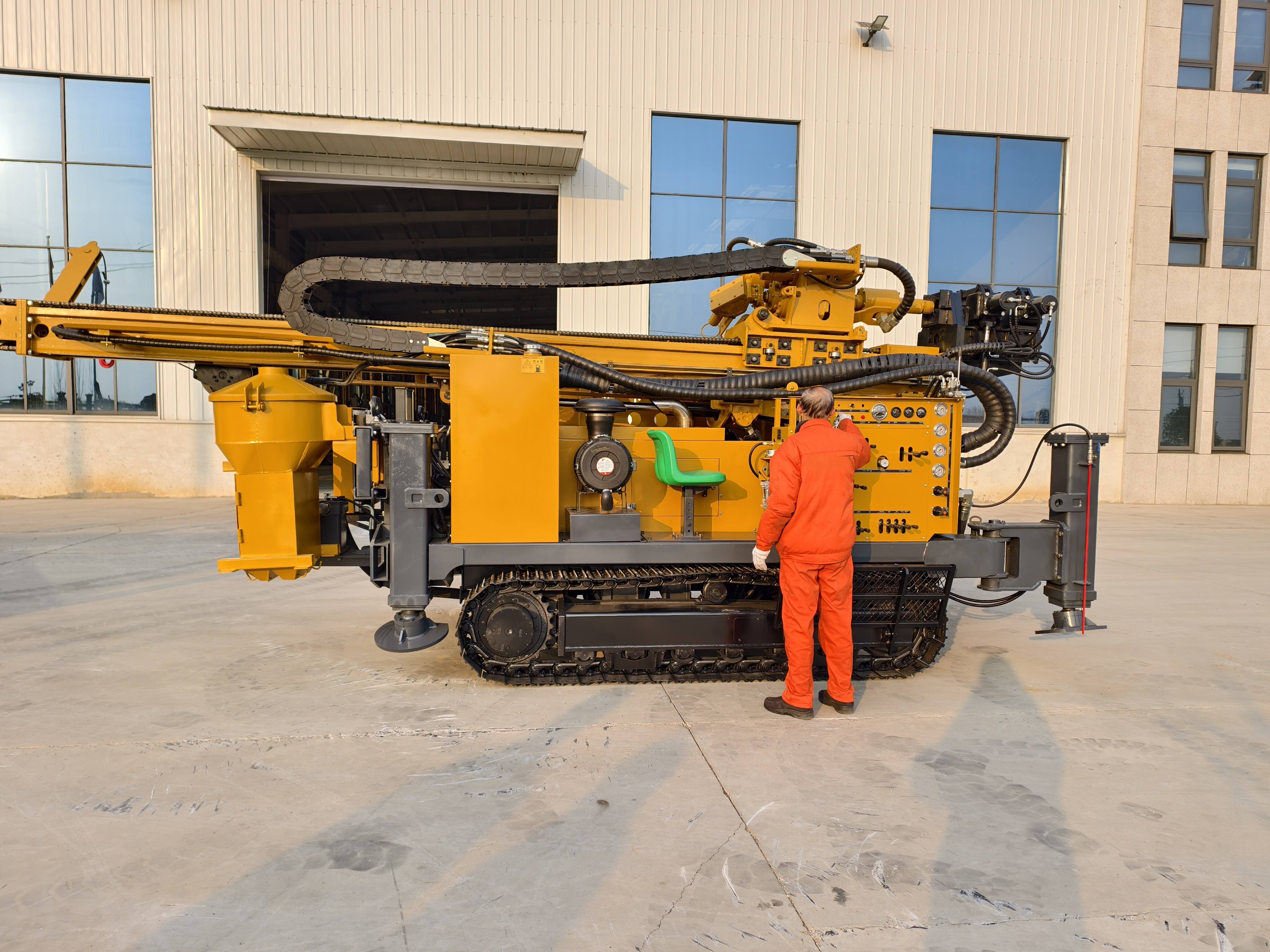
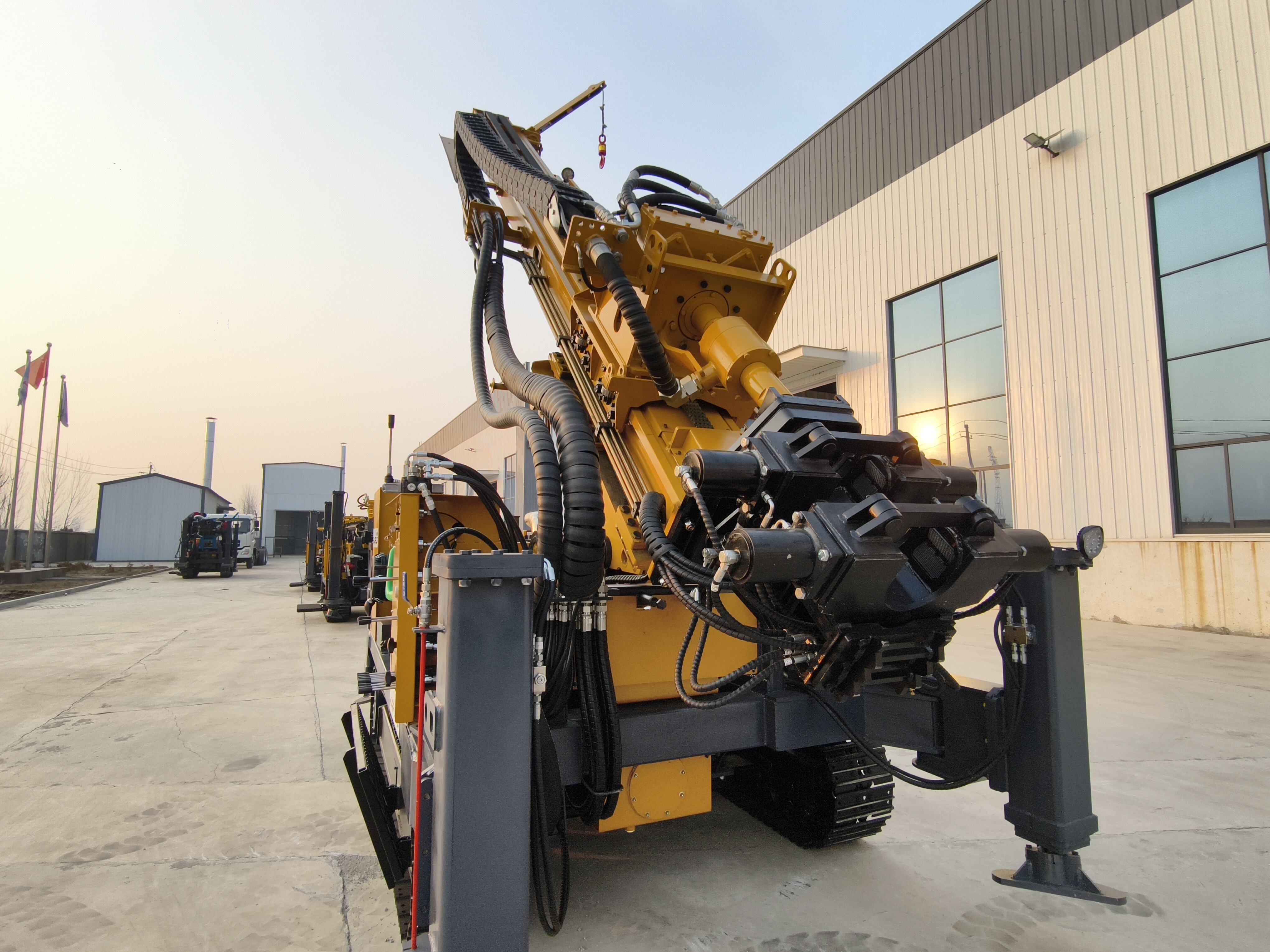
Professional Reverse Circulation Drilling Rig Service - Fast, Accurate Subsurface Exploration Solutions

All Categories

reverse circulation drilling rig service

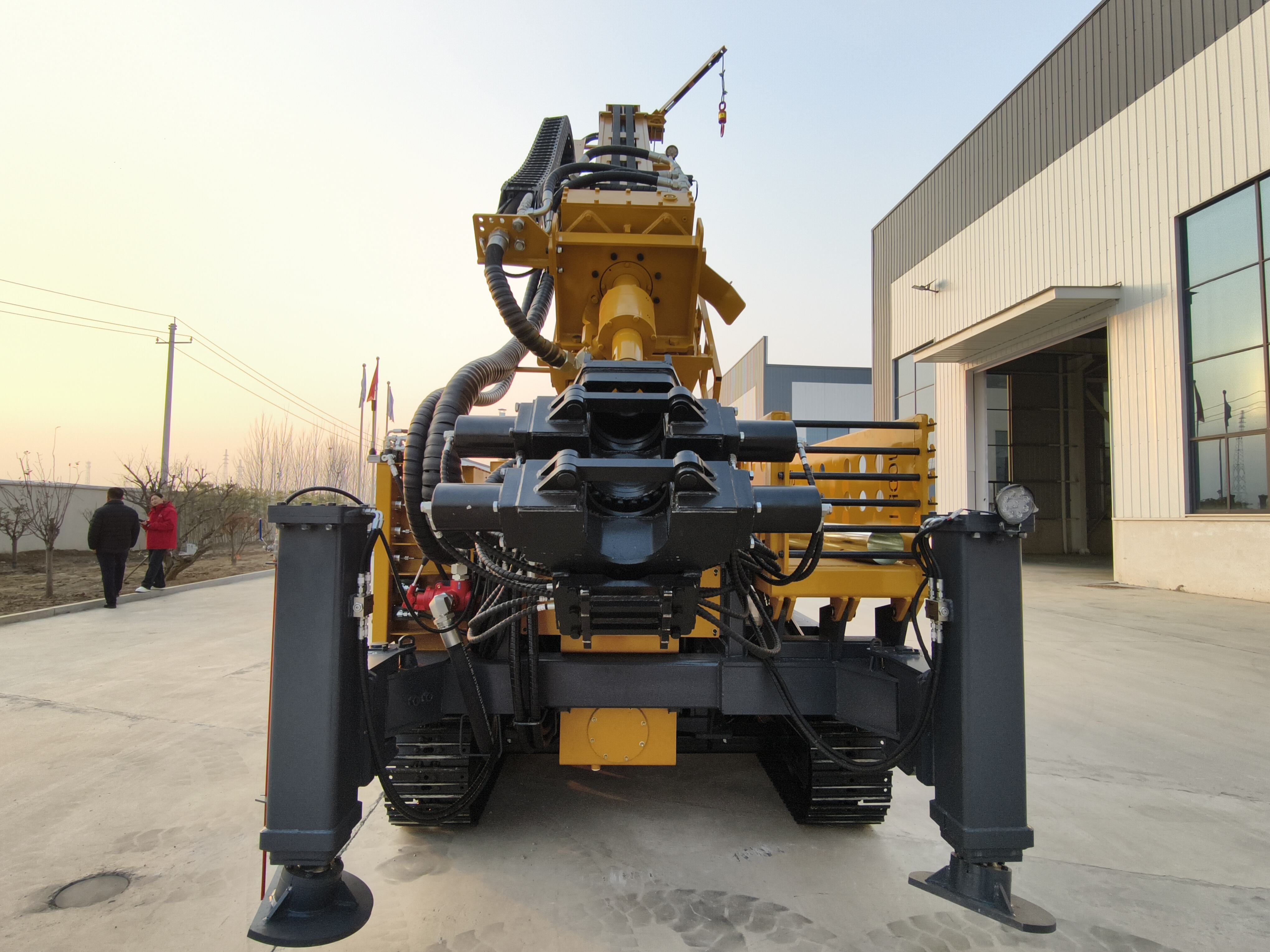
Reverse circulation drilling rig service represents a specialized drilling methodology that has revolutionized the mining, water well, and geotechnical exploration industries. This advanced drilling technique utilizes a unique system where drilling fluids and cuttings travel up through the inner tube of a dual-wall drill pipe, while air or fluid flows down through the outer annulus. The reverse circulation drilling rig service operates on the principle of pneumatic or hydraulic pressure differential, enabling efficient sample recovery and faster penetration rates across various geological formations. The main functions of this service encompass mineral exploration, groundwater investigation, geotechnical site assessment, environmental sampling, and construction foundation analysis. The technological backbone of reverse circulation drilling rig service includes powerful air compressors that generate high-pressure airflow, robust rotating mechanisms capable of handling substantial torque loads, and sophisticated sample collection systems that preserve the integrity of geological specimens. Modern reverse circulation drilling rig service incorporates automated rod handling systems, computerized depth tracking, and real-time monitoring capabilities that enhance operational safety and drilling precision. The drilling rigs used in this service vary from compact truck-mounted units suitable for confined spaces to large crawler-mounted machines designed for extensive exploration projects. Applications of reverse circulation drilling rig service span multiple sectors including precious metal exploration where uncontaminated samples are critical, agricultural water well development requiring efficient penetration through consolidated formations, and infrastructure projects demanding accurate subsurface profiling. The service proves particularly valuable in remote locations where traditional drilling methods face logistical challenges, as the equipment can be mobilized efficiently and requires minimal water resources compared to conventional rotary drilling techniques. Environmental monitoring programs extensively utilize reverse circulation drilling rig service for installing monitoring wells and collecting depth-specific soil and groundwater samples without cross-contamination between geological layers.


New Products

The reverse circulation drilling rig service delivers exceptional practical benefits that directly impact project timelines and budget considerations for clients across diverse industries. Foremost among these advantages is the superior sample quality achieved through the continuous return of drill cuttings via the inner tube, ensuring that geological specimens remain uncontaminated by materials from overlying strata. This sample integrity proves invaluable for accurate resource estimation and geological modeling, potentially saving clients substantial costs in follow-up verification drilling. The reverse circulation drilling rig service demonstrates remarkable drilling speed, often achieving penetration rates two to three times faster than conventional methods, particularly in unconsolidated to moderately consolidated formations. This velocity translates to reduced mobilization time on site, lower labor costs, and the ability to complete more drill holes within project timeframes, maximizing the value of exploration investments. Operational efficiency represents another significant advantage, as the reverse circulation drilling rig service requires fewer personnel to operate compared to diamond core drilling operations, while maintaining higher productivity levels. The method excels in dry or water-scarce environments because it primarily uses compressed air as the circulation medium, eliminating the need for extensive water trucking and storage infrastructure that conventional drilling demands. Cost-effectiveness extends throughout the project lifecycle, with reduced consumable expenses as the reverse circulation drilling rig service experiences less drill bit wear in suitable formations and requires fewer drill string components than competitive technologies. The service provides versatility across geological conditions, successfully penetrating everything from soft sediments to moderately hard rock formations, giving clients flexibility in applying a single drilling solution across varied terrain within their project areas. Safety improvements materialize through automated handling systems that minimize manual lifting of heavy drill rods, reducing workplace injury risks and associated project delays. Environmental stewardship becomes achievable as the reverse circulation drilling rig service generates minimal site disturbance, produces manageable waste volumes, and allows for straightforward site rehabilitation upon project completion. Real-time decision-making capabilities emerge from the immediate availability of drill cuttings at surface, enabling geologists to adjust drilling programs dynamically based on encountered geology, optimizing resource allocation and avoiding unnecessary drilling expenditure. The reverse circulation drilling rig service accommodates various hole diameters, supporting different project requirements from narrow environmental monitoring installations to larger diameter production wells, providing scalable solutions that grow with client needs.

Latest News

Why Is Automation Becoming Key in Underground Mining Dump Truck Design?

17

Nov

Why Is Automation Becoming Key in Underground Mining Dump Truck Design?

The mining industry is experiencing a revolutionary transformation as automation technologies reshape how operations are conducted beneath the earth's surface. Modern underground mining dump truck systems are at the forefront of this technological ev...
View More
How Can an Underground LHD Loader Improve Efficiency in Mining Operations?

11

Dec

How Can an Underground LHD Loader Improve Efficiency in Mining Operations?

Enhancing Mining Productivity with Underground LHD Loaders Underground mining operations demand high efficiency, safety, and reliability. The introduction of underground LHD (Load, Haul, Dump) loaders has revolutionized mining processes, providing a ...
View More
What Should Mining Companies Consider When Selecting an Underground LHD Loader?

11

Dec

What Should Mining Companies Consider When Selecting an Underground LHD Loader?

Underground mining operations require specialized equipment that can withstand harsh conditions while maintaining optimal performance and safety standards. The selection of an underground LHD loader represents one of the most critical decisions minin...
View More
Why Are LHD Loaders Preferred for Material Handling in Confined Spaces?

11

Dec

Why Are LHD Loaders Preferred for Material Handling in Confined Spaces?

Underground mining operations and construction projects in confined spaces present unique challenges that require specialized equipment capable of navigating narrow tunnels and restricted work areas. LHD loaders have emerged as the preferred solution...
View More

Get a Free Quote

Our representative will contact you soon.
Email
Name
Company Name
Message
0/1000

reverse circulation drilling rig service

Uncompromising Sample Quality and Geological Accuracy

Uncompromising Sample Quality and Geological Accuracy

The reverse circulation drilling rig service establishes new benchmarks in sample collection precision, addressing one of the most critical challenges in subsurface investigation where accurate geological interpretation depends entirely on representative specimens. The fundamental design of this drilling approach routes all drill cuttings through the protected inner tube of the dual-wall drill string, creating an enclosed pathway that prevents dilution or contamination from previously penetrated geological horizons. This containment system ensures that every sample reaching the surface accurately represents the specific depth interval being drilled, providing geologists with reliable data for resource calculations, stratigraphic correlation, and mineralization assessment. The continuous sample stream delivered by reverse circulation drilling rig service eliminates the sample loss issues that plague other drilling methods, where circulation interruptions or poor return flows result in gaps in the geological record that compromise interpretation confidence. Particle size distribution remains largely preserved during the pneumatic transport process, maintaining the textural characteristics essential for proper geological classification and engineering parameter determination. The rapid sample delivery inherent in reverse circulation drilling rig service means that drill cuttings reach the surface within seconds of being generated, minimizing chemical alteration and moisture content changes that can occur with prolonged exposure to drilling fluids in conventional systems. This freshness proves particularly crucial when conducting geochemical analyses or identifying oxidation boundaries in mineral deposits where subtle chemical variations indicate ore grade changes. The volumetric consistency of samples from reverse circulation drilling rig service facilitates standardized splitting and subsampling procedures, reducing the analytical variance that introduces uncertainty into resource models and potentially affects project valuations by millions of dollars. Quality assurance protocols become more straightforward to implement because the systematic sample collection inherent in this drilling service allows for regular insertion of certified reference materials and duplicate samples at predetermined intervals. The contamination-free nature of reverse circulation drilling rig service samples eliminates the ambiguity surrounding anomalous assay results, reducing the need for expensive verification programs and accelerating project advancement through exploration stages. For environmental applications, the precise depth control and isolated sample recovery provided by this drilling service enable accurate contaminant plume delineation and confident compliance with regulatory sampling requirements, protecting clients from remediation cost overruns caused by inadequate site characterization.
Exceptional Drilling Speed and Operational Efficiency

Exceptional Drilling Speed and Operational Efficiency

The reverse circulation drilling rig service achieves remarkable penetration rates that fundamentally transform project economics and scheduling feasibility across exploration and development programs. The high-velocity airflow generated by industrial compressors in this drilling system creates powerful lift forces that evacuate drill cuttings almost instantaneously from the bit face, preventing the regrinding and bit clogging that slow conventional drilling methods. This efficient cuttings removal mechanism allows the drill bit to continuously engage fresh formation material, maintaining optimal cutting efficiency and sustaining rapid advancement even through challenging geological sequences. The reverse circulation drilling rig service typically completes holes in one-third to one-half the time required by comparable diamond core drilling operations, directly reducing the daily rate charges that constitute the largest component of drilling budgets. This speed advantage compounds across large programs involving hundreds of drill holes, potentially shortening overall project duration by months and bringing resources to production stages significantly earlier than alternative drilling approaches would permit. Mobilization efficiency contributes substantially to the productivity profile of reverse circulation drilling rig service, as the self-contained nature of modern rigs allows for rapid relocation between drill sites with minimal setup requirements, maximizing the proportion of billable time spent actually drilling rather than moving equipment. The simplicity of the drilling system means that routine maintenance procedures can be completed quickly during crew changes or adverse weather delays, ensuring maximum uptime and consistent program advancement. Operational staffing requirements for reverse circulation drilling rig service remain modest compared to core drilling operations, typically requiring only a driller and offsider to maintain full productivity, reducing labor costs while simultaneously simplifying crew logistics in remote locations. The drilling method adapts readily to extended shift operations, with many reverse circulation drilling rig service providers offering continuous operations that capitalize on the method's mechanical reliability to achieve dramatic increases in meters drilled per week. Consumable costs remain controlled throughout drilling programs because the air-based circulation system in reverse circulation drilling rig service eliminates expenses for drilling mud chemicals, polymers, and water transportation that burden conventional rotary programs. Drill bit longevity in suitable formations often exceeds expectations, with tungsten carbide button bits commonly achieving several hundred meters of penetration before requiring replacement, further contributing to the favorable cost per meter that reverse circulation drilling rig service delivers to budget-conscious clients seeking maximum value from exploration investments.
Environmental Responsibility and Site Sustainability

Environmental Responsibility and Site Sustainability

The reverse circulation drilling rig service embodies environmental stewardship principles that align with contemporary corporate sustainability commitments and increasingly stringent regulatory frameworks governing land disturbance activities. Water conservation represents perhaps the most significant environmental advantage, as this drilling methodology operates primarily with compressed air as the circulation medium, reducing freshwater consumption by up to ninety percent compared to mud rotary drilling systems that require continuous water supply for effective operation. This dramatic reduction in water usage proves particularly valuable in arid regions where freshwater resources face competing agricultural and municipal demands, or in jurisdictions implementing water allocation restrictions during drought conditions. The reverse circulation drilling rig service generates minimal waste streams, producing dry drill cuttings that can be readily managed through simple containment systems rather than the large settling ponds or specialized treatment facilities required for disposing of contaminated drilling fluids from conventional operations. These dry cuttings typically meet land disposal criteria without additional treatment, simplifying waste management logistics and reducing the environmental liability footprint associated with drilling activities. Site disturbance from reverse circulation drilling rig service remains confined to relatively small pad areas because the equipment footprint of modern rigs has been optimized through vertical rather than horizontal equipment arrangements, preserving vegetation and minimizing erosion potential in sensitive ecosystems. The absence of large fluid storage tanks, settling ponds, and extensive pipeline networks means that reverse circulation drilling rig service operations integrate more harmoniously into agricultural landscapes, allowing concurrent land use to continue with minimal disruption to farming or grazing activities. Rehabilitation timelines shorten considerably following reverse circulation drilling rig service completion, as sites lack the contaminated soil issues and compacted mud-affected areas that require extensive remediation after fluid-intensive drilling methods, enabling faster return of land to productive use and strengthening community relations. Noise emissions from modern reverse circulation drilling rig service equipment incorporate sound attenuation technologies that reduce community impact in residential proximity situations, addressing social license concerns that increasingly influence project approval processes. The method's efficiency translates to reduced fuel consumption per meter drilled, lowering the carbon footprint of exploration programs and contributing to corporate emissions reduction targets that stakeholders now scrutinize closely. Groundwater protection receives enhanced attention through the reverse circulation drilling rig service approach, as the positive air pressure maintained during drilling prevents influx of surface contaminants into aquifers and the immediate grouting capability allows for prompt sealing of completed holes to prevent inter-aquifer communication that could compromise water quality.

Get a Free Quote

Our representative will contact you soon.
Email
Name
Company Name
Message
0/1000