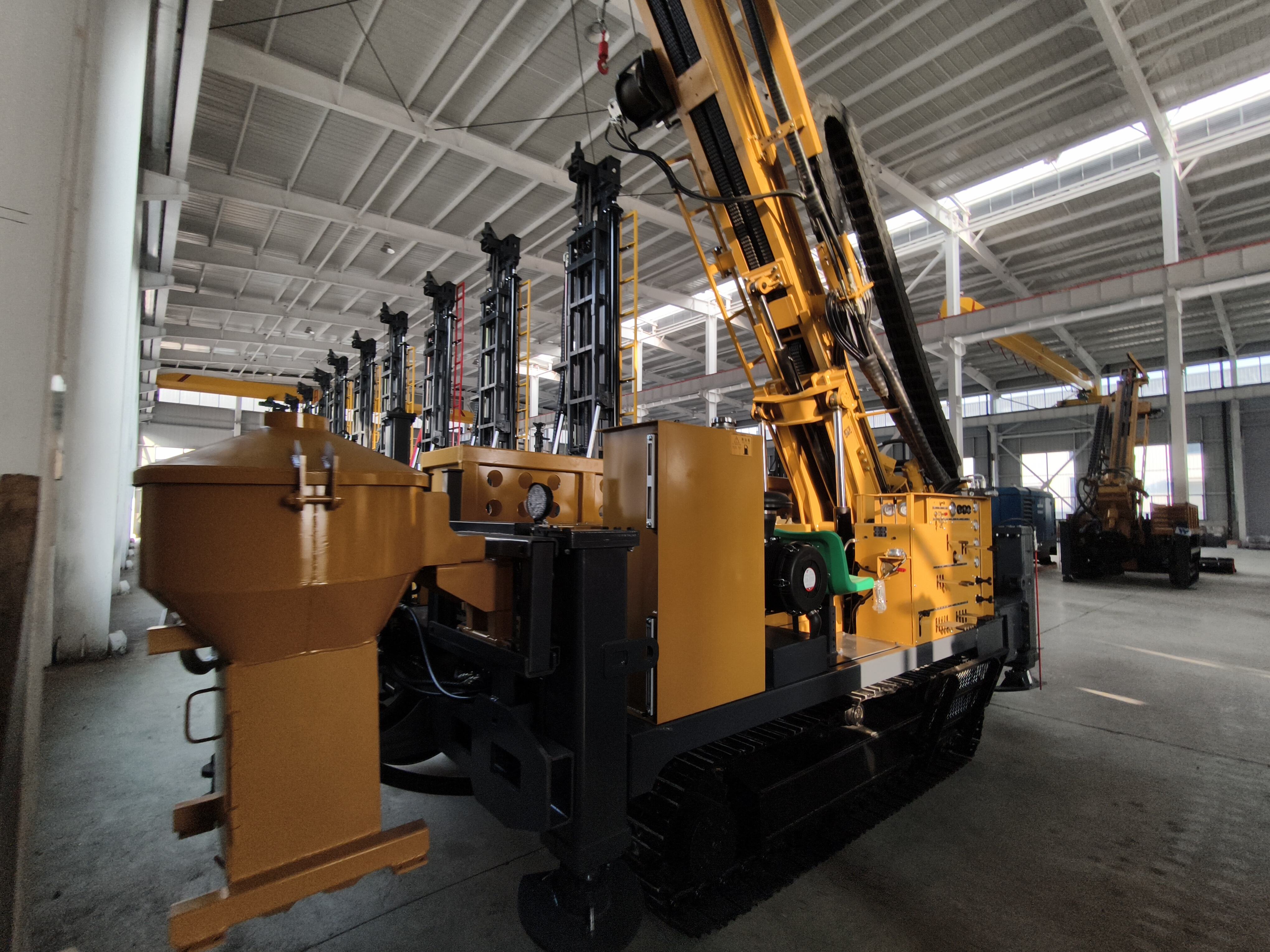
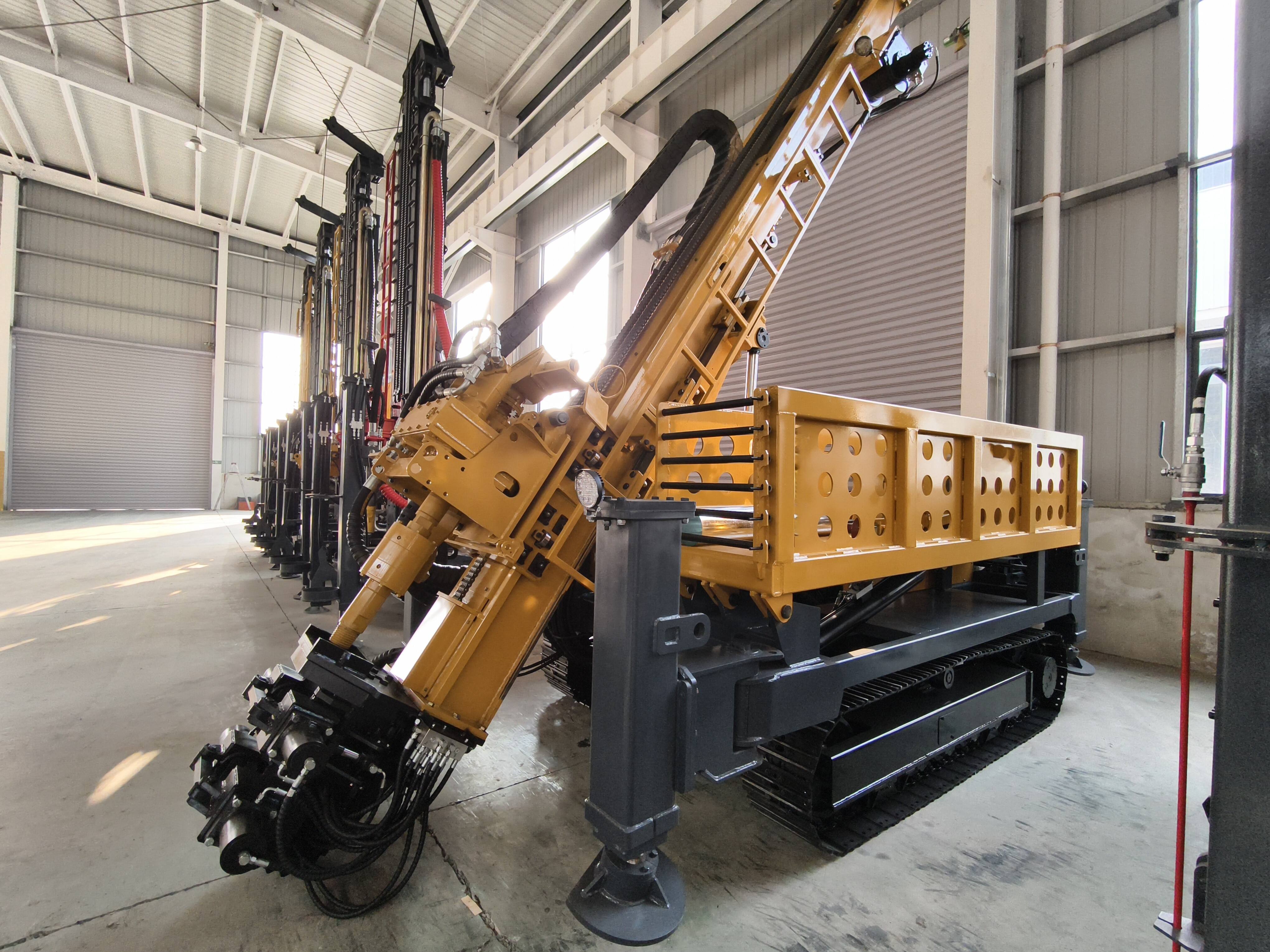
Reverse Circulation Drilling Equipment - Advanced Solutions for Efficient Mineral Exploration and Water Well Drilling

All Categories

reverse circulation drilling equipment

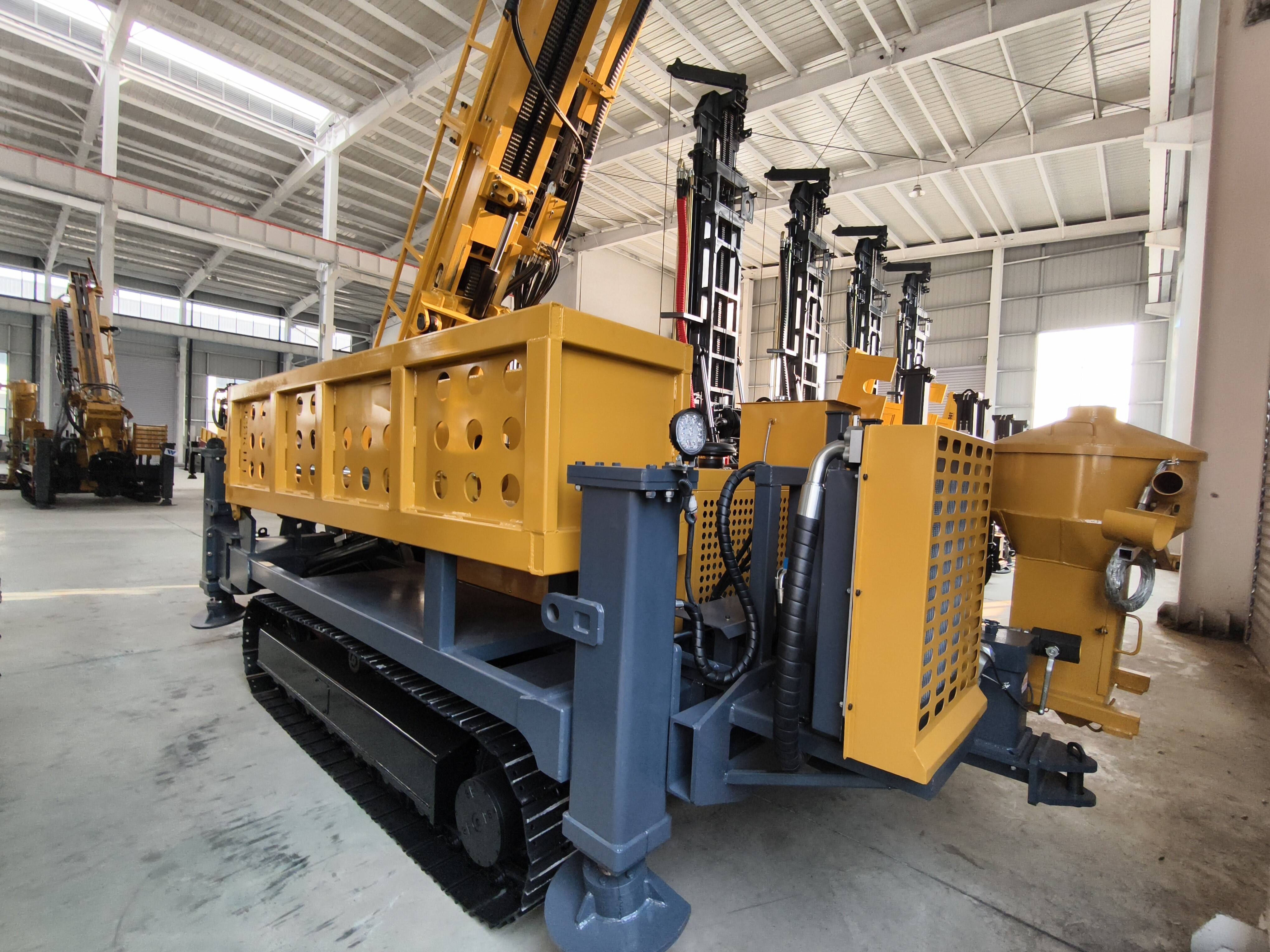
Reverse circulation drilling equipment represents a sophisticated drilling technology that has revolutionized mineral exploration, water well construction, and geotechnical investigations across the globe. This advanced machinery operates on a unique principle where drilling fluid and cuttings travel upward through the inner tube of a dual-wall drill pipe, while air or fluid flows downward through the outer annulus. The reverse circulation drilling equipment delivers exceptional performance in various geological conditions, making it an indispensable tool for mining operations, environmental studies, and construction projects. The main functions of this equipment include rapid penetration through different rock formations, efficient sample recovery, and precise depth control. The system comprises several critical components: a powerful compressor that generates high-pressure air, a robust drill rig with excellent torque capacity, specialized dual-wall drill pipes, and advanced hammer or bit assemblies designed for optimal rock fragmentation. Technological features of reverse circulation drilling equipment include automated controls for monitoring drilling parameters, hydraulic systems that ensure smooth operation, and sophisticated sample collection mechanisms that preserve the integrity of geological specimens. The equipment can operate in diverse terrains, from soft sediments to extremely hard rock formations, with drilling depths ranging from shallow investigations to several hundred meters. Applications of reverse circulation drilling equipment span multiple industries: mining companies utilize it for grade control and resource estimation, environmental consultants employ it for groundwater monitoring well installation, geotechnical engineers depend on it for soil and rock characterization, and construction firms use it for foundation investigations. The versatility of this drilling method makes it particularly valuable in remote locations where sample quality is paramount and drilling efficiency directly impacts project economics and timelines.

Popular Products

The reverse circulation drilling equipment offers numerous practical benefits that directly translate into cost savings and improved project outcomes for operators and contractors. First and foremost, this technology delivers uncontaminated samples with exceptional accuracy, ensuring that geological data remains reliable throughout the entire drilling process. Unlike conventional drilling methods where samples can become mixed or diluted, the reverse circulation system transports cuttings directly from the drill bit to the surface through an enclosed pipe system, eliminating cross-contamination between different geological layers. This feature proves invaluable when conducting mineral assays or environmental assessments where sample purity determines critical business decisions. The equipment achieves remarkably faster drilling rates compared to traditional diamond core drilling, often completing boreholes in half the time or less. This speed advantage stems from the efficient rock removal mechanism and the ability to maintain continuous drilling operations without frequent interruptions for sample retrieval. Faster drilling directly reduces labor costs, equipment rental expenses, and overall project duration, allowing companies to complete more boreholes within budget constraints. Another significant advantage involves the dry sample recovery process, which produces cuttings that require minimal processing before analysis. Geological teams can immediately examine samples in the field, making real-time decisions about drilling locations and depths without waiting for laboratory results. The reverse circulation drilling equipment operates effectively in challenging conditions where other methods struggle, including unstable formations, water-bearing zones, and areas with variable rock hardness. The high-velocity air column stabilizes borehole walls naturally, reducing the need for expensive casing materials and simplifying drilling operations. Maintenance requirements for this equipment remain manageable, with most components designed for easy access and replacement. Operators appreciate the lower consumable costs compared to diamond drilling, as bits and hammers typically last longer and cost less to replace. The equipment provides excellent versatility, capable of switching between different drilling applications with minimal configuration changes. This flexibility means companies can deploy the same rig for exploration drilling, water well construction, or geotechnical investigations, maximizing equipment utilization and return on investment. Environmental impact remains minimal since the drilling process generates less waste and requires fewer chemicals compared to alternative methods. The reduced footprint and quieter operation make reverse circulation drilling equipment suitable for projects in sensitive areas or near residential zones. Safety features integrated into modern equipment designs protect operators while maintaining high productivity levels, with automated systems reducing the need for manual intervention during drilling operations.

Tips And Tricks

Why Is Automation Becoming Key in Underground Mining Dump Truck Design?

17

Nov

Why Is Automation Becoming Key in Underground Mining Dump Truck Design?

The mining industry is experiencing a revolutionary transformation as automation technologies reshape how operations are conducted beneath the earth's surface. Modern underground mining dump truck systems are at the forefront of this technological ev...
View More
How Do Load Capacity and Size Affect Underground LHD Loader Performance?

11

Dec

How Do Load Capacity and Size Affect Underground LHD Loader Performance?

Underground mining operations depend heavily on efficient material handling equipment, with the underground LHD loader serving as the backbone of productive ore extraction and transportation. These versatile machines must navigate confined spaces whi...
View More
What Performance Factors Define a Scooptram 1 Cubic Yard?

07

Jan

What Performance Factors Define a Scooptram 1 Cubic Yard?

Underground mining operations demand precision, reliability, and efficiency from every piece of equipment deployed in challenging subterranean environments. The scooptram 1 cubic yard represents a crucial component in modern mining fleets, offering t...
View More
The Science of Climbing: How Drivetrain Design Determines Underground Truck Performance on Steep Ramps

18

Mar

The Science of Climbing: How Drivetrain Design Determines Underground Truck Performance on Steep Ramps

When underground operations push deeper into the earth, the challenges of moving materials up steep gradients become exponentially complex. The ability of an underground truck to conquer challenging ramps isn't just about raw power—it's fundamentally...
View More

Get a Free Quote

Our representative will contact you soon.
Email
Name
Company Name
Message
0/1000

reverse circulation drilling equipment

Superior Sample Quality and Geological Accuracy

Superior Sample Quality and Geological Accuracy

The reverse circulation drilling equipment stands out in the industry primarily due to its exceptional ability to deliver pristine, uncontaminated samples that provide accurate geological information crucial for decision-making processes. This unique capability stems from the innovative dual-pipe system design where sample material travels upward through the inner pipe while remaining completely isolated from the drilling fluid circulating down the outer pipe. This closed-loop configuration prevents any mixing between samples from different depths, ensuring that each geological layer remains distinctly identifiable and chemically unaltered during the extraction process. For mining exploration projects, this level of sample integrity proves absolutely critical because even minor contamination can lead to incorrect grade estimations, potentially resulting in millions of dollars in miscalculated resource valuations. The continuous sample stream produced by reverse circulation drilling equipment allows geologists to construct detailed stratigraphic logs with precise depth correlations, identifying subtle changes in mineralization, rock type, and structural features that might indicate valuable ore deposits or important geological boundaries. The dry nature of the recovered samples represents another tremendous advantage, as moisture content remains minimal compared to samples obtained through mud rotary or other wet drilling methods. Dry samples facilitate immediate field examination using portable X-ray fluorescence analyzers or simple visual inspection, enabling exploration teams to make informed decisions about subsequent drilling targets without delays associated with laboratory processing. This real-time analytical capability accelerates exploration programs significantly, allowing companies to adjust their drilling patterns based on immediate feedback rather than waiting days or weeks for assay results. Environmental consultants particularly value this sample quality when installing monitoring wells or conducting contamination assessments, as the uncontaminated cuttings provide reliable data about subsurface conditions and potential pollutant distribution. The particle size distribution of samples recovered through reverse circulation drilling equipment typically remains representative of the actual formation, unlike some methods that preferentially recover certain grain sizes while losing finer materials. This representative sampling ensures that subsequent laboratory analyses accurately reflect true geological conditions, supporting confident interpretations and reducing the risk of project failures based on misleading data. The consistent sample recovery rate maintained throughout the drilling process means that geologists receive continuous information without gaps, enabling comprehensive understanding of subsurface conditions and reducing uncertainty in geological models used for resource estimation or engineering design purposes.
Exceptional Drilling Speed and Operational Efficiency

Exceptional Drilling Speed and Operational Efficiency

Reverse circulation drilling equipment delivers outstanding productivity through remarkably fast penetration rates that significantly outpace conventional drilling technologies, providing substantial economic advantages for projects with multiple boreholes or tight scheduling constraints. The superior speed performance originates from the highly efficient rock fragmentation and cutting removal system, where powerful pneumatic hammers or roller cone bits break rock into small particles while high-velocity air immediately evacuates these cuttings from the borehole bottom. This continuous removal process prevents re-grinding of already broken material, a common inefficiency in other drilling methods where cuttings accumulate around the bit and reduce drilling effectiveness. The absence of cuttings buildup at the drill face allows the bit to maintain constant contact with fresh rock, sustaining optimal penetration rates throughout the drilling operation regardless of hole depth. In many geological settings, reverse circulation drilling equipment can advance boreholes at rates exceeding fifty meters per hour, compared to conventional diamond core drilling which typically progresses at five to fifteen meters per hour under similar conditions. This dramatic speed difference translates directly into reduced project costs, as drilling contractors can complete the same scope of work in considerably less time, lowering expenses related to labor, equipment rental, fuel consumption, and site accommodation. The rapid drilling capability proves especially valuable in exploration programs where companies need to test numerous targets quickly to identify the most promising areas for detailed investigation, enabling faster discovery of economic mineral deposits or suitable water resources. Beyond raw penetration speed, the operational efficiency of reverse circulation drilling equipment extends to reduced downtime between drilling runs, as the system eliminates the time-consuming process of retrieving core barrels that characterizes diamond drilling operations. Drillers simply maintain continuous circulation while advancing the hole, pausing only briefly to add additional drill pipe sections as depth increases. This streamlined workflow minimizes non-productive time and maximizes the proportion of each shift spent actually drilling rather than handling equipment. The simplified sample collection process contributes further to operational efficiency, with cuttings automatically delivered to a cyclone separator at the surface where they drop into sample bags without requiring manual intervention or complex handling procedures. Maintenance intervals for reverse circulation drilling equipment typically align well with natural breaks in drilling operations, allowing servicing during crew changes or between drilling locations without creating additional delays. The reliability of modern equipment designs means that unexpected breakdowns occur infrequently, particularly when operators follow recommended maintenance schedules and use quality replacement parts. This dependability ensures that project schedules remain on track and clients receive their geological data within promised timeframes, building trust and supporting repeat business relationships.
Versatile Application Range and Cost-Effective Operation

Versatile Application Range and Cost-Effective Operation

The remarkable versatility of reverse circulation drilling equipment makes it an exceptionally cost-effective investment for drilling contractors and companies that require flexible solutions capable of addressing diverse geological challenges and project requirements. This adaptability stems from the fundamental drilling mechanism which performs effectively across an enormous range of formation types, from unconsolidated sediments and weathered materials to competent bedrock and extremely hard metamorphic rocks. Unlike specialized drilling methods that excel in narrow application windows, reverse circulation drilling equipment handles nearly any geological condition encountered in typical exploration, water well, or geotechnical projects, eliminating the need for multiple specialized rigs and reducing overall equipment costs. The adjustable operating parameters allow experienced drillers to optimize performance for specific conditions by modifying air pressure, rotation speed, bit weight, and penetration rate to match formation characteristics and project objectives. In soft formations, operators reduce air volume and penetration rates to prevent hole instability, while in hard rock environments, they increase hammer pressure and rotation speed to maximize rock breakage and drilling progress. This operational flexibility ensures efficient drilling regardless of geological variability encountered along the borehole path, maintaining productivity even when formations change unexpectedly. The equipment accommodates various hole diameters ranging from small-diameter exploration holes to large-diameter water wells or production boreholes, simply by changing the hammer size and drill pipe diameter to suit project specifications. This diameter flexibility allows contractors to use the same basic rig platform for different applications, maximizing equipment utilization and improving return on investment compared to purchasing multiple specialized drilling systems. Cost advantages extend to consumable items, where reverse circulation drilling equipment typically demonstrates lower bit and hammer replacement costs compared to diamond drilling which requires expensive core barrels and diamond-impregnated bits. The robust construction of percussion hammers and roller cone bits used in reverse circulation systems allows them to withstand abrasive conditions and deliver extended service life, reducing the frequency of costly bit changes and minimizing downtime associated with tool replacement. Fuel consumption per meter drilled often proves lower than alternative methods due to the efficient drilling action and rapid penetration rates, contributing to reduced operating costs and improved project economics. The minimal support equipment requirements represent another significant economic advantage, as reverse circulation drilling equipment needs only a suitable compressor, basic water supply for dust suppression, and standard drill pipe handling tools, avoiding the complex auxiliary systems required by some competing technologies. Training requirements for crew members remain reasonable, with operators quickly developing proficiency in equipment operation and sample handling procedures, reducing the specialized labor costs associated with more complex drilling technologies. The environmental footprint and permitting requirements for reverse circulation drilling projects typically remain minimal, as the method generates manageable waste volumes, operates with acceptable noise levels, and uses environmentally benign materials, facilitating project approvals and reducing regulatory compliance costs in sensitive locations or jurisdictions with strict environmental standards.


Get a Free Quote

Our representative will contact you soon.
Email
Name
Company Name
Message
0/1000