
 EN
EN
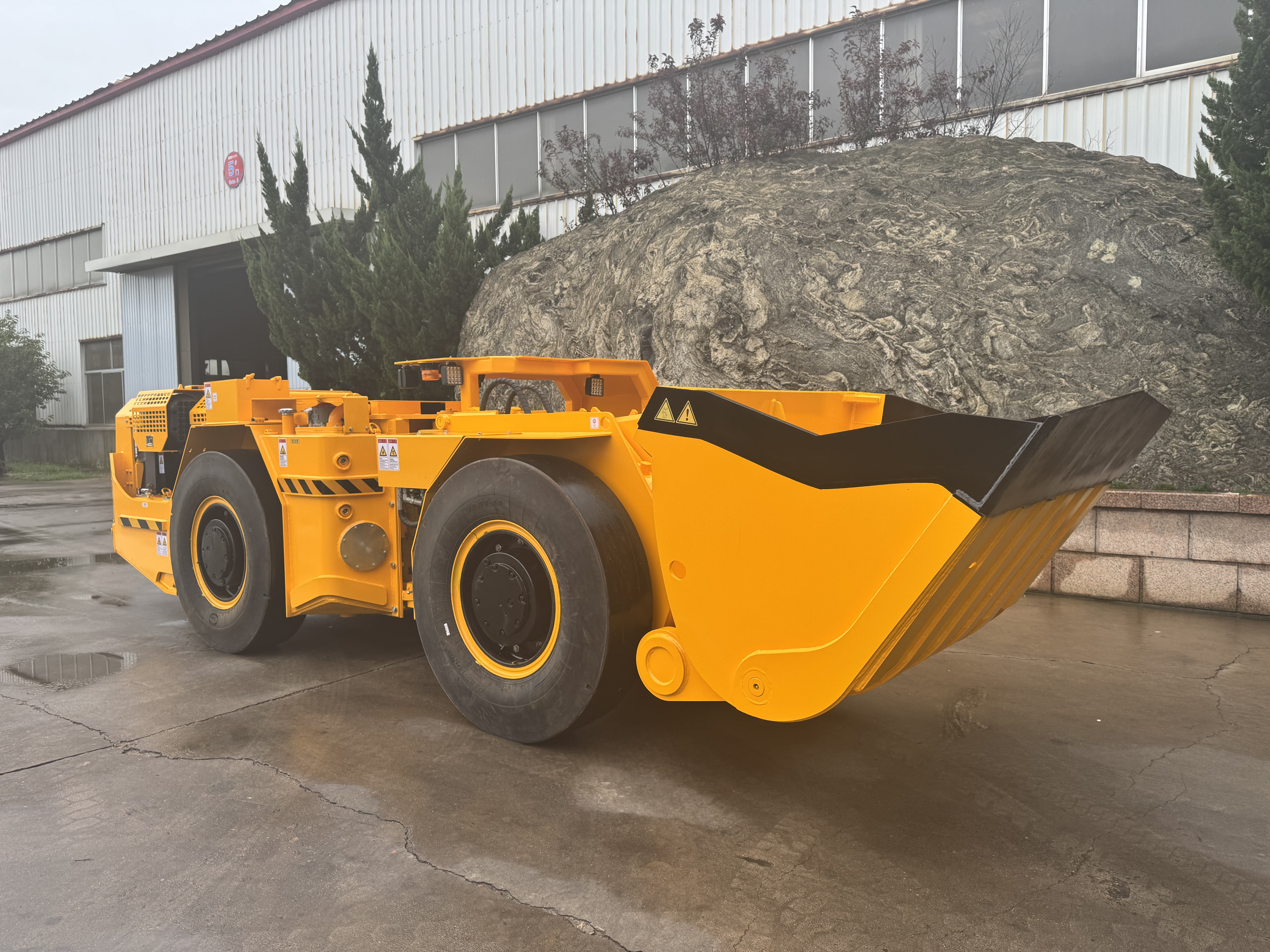
Underground mining operations depend heavily on efficient material handling equipment, with the underground LHD loader serving as the backbone of productive ore extraction and transportation. These versatile machines must navigate confined spaces while maintaining optimal performance levels, making the relationship between load capacity and size a critical factor in operational success. Understanding how these parameters interact directly impacts productivity, safety, and overall mining profitability. The selection of appropriate underground LHD loader specifications requires careful consideration of multiple factors including tunnel dimensions, ore characteristics, and operational requirements.
Load Capacity Fundamentals in Underground Mining
Defining Payload Requirements
The load capacity of an underground LHD loader represents the maximum weight of material it can safely transport in a single cycle. This specification directly correlates with the machine's hydraulic system capabilities, structural integrity, and engine power output. Mining operations typically require loaders with capacities ranging from 1.5 to 15 cubic yards, depending on the scale of extraction activities. Proper payload calculation must account for material density variations, as different ore types exhibit significantly different weight-to-volume ratios.
Operational efficiency increases when the underground LHD loader capacity matches the specific requirements of the mining operation. Undersized equipment results in excessive cycle times and reduced productivity, while oversized loaders may struggle to maneuver effectively in restricted spaces. The optimal capacity selection balances maximum payload with operational flexibility, ensuring consistent performance across varying conditions.
Impact on Cycle Time Performance
Higher load capacities typically translate to improved cycle time efficiency by reducing the number of trips required to transport a given volume of material. However, this relationship is not linear, as increased capacity often comes with longer loading times and potentially slower travel speeds due to increased weight. The break-even point varies depending on haul distances, with longer routes generally favoring higher capacity machines despite slower individual cycle times.
Cycle time optimization requires careful analysis of loading, hauling, dumping, and return phases of the operation. Underground LHD loader operators must balance aggressive loading practices with equipment longevity, as excessive payload can accelerate wear on critical components including hydraulic systems, tires, and drivetrain elements. Modern telemetry systems enable real-time monitoring of payload distribution and cycle efficiency metrics.
Size Constraints and Maneuverability Considerations
Dimensional Limitations in Underground Environments
Underground mining environments impose strict dimensional constraints on equipment selection, with tunnel heights, widths, and turning radii directly limiting the maximum size of deployable machinery. Standard underground LHD loader dimensions must accommodate drift specifications while maintaining adequate clearance for safe operation. Typical underground tunnels range from 3 to 5 meters in width and height, requiring equipment designers to optimize performance within these physical boundaries.
The relationship between machine size and operational effectiveness extends beyond simple dimensional compliance. Larger underground LHD loader models often feature enhanced stability and improved operator comfort, but may sacrifice maneuverability in tight spaces. Equipment selection must consider not only current tunnel dimensions but also future expansion plans and maintenance access requirements throughout the operational lifecycle.
Articulation and Steering Performance
Articulated steering systems enable underground LHD loader units to navigate sharp turns and confined spaces more effectively than rigid-frame alternatives. The articulation angle directly impacts turning radius, with higher angles providing superior maneuverability at the expense of potential structural complexity. Most modern underground loaders feature articulation angles between 35 and 45 degrees, optimizing the balance between maneuverability and mechanical reliability.
Steering responsiveness becomes increasingly critical as machine size increases, requiring sophisticated hydraulic control systems to maintain precise directional control. Advanced underground LHD loader models incorporate electronic steering assistance and stability management systems to enhance operator control in challenging conditions. These technologies enable larger machines to operate effectively in spaces previously restricted to smaller equipment.
Performance Optimization Through Capacity-Size Balance
Productivity Maximization Strategies
Achieving optimal underground LHD loader performance requires strategic matching of load capacity and size parameters to specific operational conditions. Mining engineers must analyze material flow requirements, tunnel configurations, and operational schedules to identify the ideal equipment specifications. Computer simulation and modeling tools enable detailed analysis of various capacity-size combinations before making substantial capital investments.
Performance optimization extends beyond individual machine capabilities to encompass fleet coordination and operational workflow integration. Multiple smaller underground LHD loader units may provide superior flexibility and redundancy compared to fewer large machines, particularly in operations with varying material handling requirements. Fleet diversity enables adaptive responses to changing conditions while maintaining consistent productivity levels.
Maintenance and Operational Cost Factors
Larger underground LHD loader models typically require more extensive maintenance procedures and higher-cost replacement components, impacting total cost of ownership calculations. However, increased productivity and reduced labor requirements may offset these higher maintenance costs over the equipment lifecycle. Maintenance scheduling becomes more critical with larger machines, as downtime impacts proportionally more significant portions of operational capacity.
Component standardization across different underground LHD loader sizes can reduce inventory requirements and maintenance complexity. Many manufacturers offer modular component designs that enable parts sharing between various capacity classes, improving maintenance efficiency and reducing spare parts investment. Predictive maintenance technologies help optimize service intervals and minimize unexpected downtime across diverse equipment specifications.
Technology Integration and Modern Developments
Automation and Control Systems
Modern underground LHD loader systems incorporate sophisticated automation technologies that optimize the relationship between load capacity utilization and operational efficiency. Automated loading systems can precisely control payload distribution to maximize capacity utilization while maintaining optimal weight distribution for improved stability and performance. These systems reduce operator skill requirements while ensuring consistent performance across varying conditions and personnel.
Remote operation capabilities enable underground LHD loader deployment in hazardous environments while maintaining precise control over loading and transport operations. Advanced sensor systems provide real-time feedback on payload weight, distribution, and equipment status, enabling operators to make informed decisions regarding capacity optimization. Integration with mine planning systems allows for predictive optimization of equipment deployment and capacity utilization.
Power and Efficiency Improvements
Electric and hybrid powertrains are increasingly common in underground LHD loader applications, offering improved efficiency and reduced environmental impact compared to traditional diesel systems. Electric drive systems provide precise torque control and regenerative braking capabilities that enhance performance in confined spaces while reducing operating costs. Battery technology improvements enable extended operation periods without compromising load capacity or operational flexibility.
Energy management systems optimize power distribution between propulsion, hydraulic, and auxiliary systems based on real-time operational requirements. These systems enable underground LHD loader operators to prioritize capacity utilization during loading phases while maximizing travel speed during transport segments. Intelligent power management extends equipment range and reduces energy consumption across varying operational profiles.
FAQ
What is the optimal load capacity for most underground mining operations?
The optimal load capacity typically ranges from 3 to 8 cubic yards for most underground mining operations, depending on tunnel dimensions, haul distances, and material characteristics. This range provides an effective balance between productivity and maneuverability while accommodating standard underground infrastructure specifications. Specific requirements vary based on ore density, operational schedules, and equipment fleet composition.
How does machine size affect maintenance requirements for underground LHD loaders?
Larger underground LHD loader models generally require more extensive maintenance procedures, higher-cost replacement parts, and longer service intervals due to increased component complexity and higher stress levels. However, they often feature more robust construction and advanced diagnostic systems that can improve overall reliability. Maintenance planning must account for the proportionally higher impact of downtime with larger capacity equipment.
Can underground LHD loader capacity be modified after purchase?
Limited capacity modifications are possible through bucket changes, hydraulic system upgrades, or counterweight adjustments, but substantial capacity increases typically require different base machine specifications. Most manufacturers offer various bucket sizes and configurations for the same chassis, enabling some operational flexibility. However, structural limitations and safety considerations restrict the extent of possible modifications.
What factors determine the minimum turning radius for underground LHD loaders?
Turning radius depends on wheelbase length, articulation angle, tire size, and steering system design. Shorter wheelbases and higher articulation angles reduce turning radius but may compromise stability when loaded. Most underground LHD loader models achieve turning radii between 3 and 6 meters, with smaller machines generally offering superior maneuverability in confined spaces while larger units provide enhanced stability and capacity.